How to Safely Trim Cat Claws at Home Without Stress
Learning how to safely trim cat claws at home without stress helps protect your furniture and your cat’s comfort. Although cats naturally maintain their claws through scratching, indoor cats may need occasional trimming. Long claws can snag on carpets, bend uncomfortably, or grow into paw pads. However, many cats dislike having their paws handled. The secret is to build trust, use suitable tools, and keep each session gentle.
Understanding your cat’s body language also makes a significant difference. A relaxed cat is more likely to tolerate nail care than a frightened one. With patience and the right approach, you can make claw trimming a manageable part of your routine. You do not need to trim every claw in one sitting. Your cat’s comfort should always come first.
Why Learning How to Safely Trim Cat Claws at Home Without Stress Matters
Regular claw care helps prevent painful problems, particularly in older cats. Indoor cats often wear down their claws less naturally than outdoor cats. Consequently, their claws may become excessively long without regular checks.
Overgrown claws can catch on fabric and interfere with comfortable walking. In severe cases, curved claws may grow into the paw pads, causing wounds and infection. Regular inspections help you identify these problems before they become serious.
Trimming also reduces accidental scratches during play and handling. Nevertheless, claws serve important purposes, including climbing, stretching, balance, and self-defence. Therefore, the goal is to shorten sharp tips rather than remove the claws entirely.
When Should You Trim Your Cat’s Claws?
There is no single schedule that suits every cat. Claw growth, activity levels, age, and scratching habits all influence trimming frequency. Many indoor cats benefit from a check every one to two weeks.

Kittens may need gentle handling practice before they need regular trimming. Older cats often require closer attention because their claws may become thicker or less naturally worn.
|
Cat’s life stage |
Recommended approach |
|---|---|
|
Kittens |
Introduce paw handling gently and check claws regularly |
|
Adult indoor cats |
Inspect every one to two weeks and trim when needed |
|
Active outdoor cats |
Check regularly and trim only when appropriate |
|
Senior cats |
Inspect frequently for thick, curved, or overgrown claws |
These are general guidelines rather than strict rules. Trim only when the claw length requires it. Ask your veterinarian for advice if your cat has mobility problems or unusually thick claws.
How to Safely Trim Cat Claws at Home Without Stress
Prepare the Right Tools Before Starting
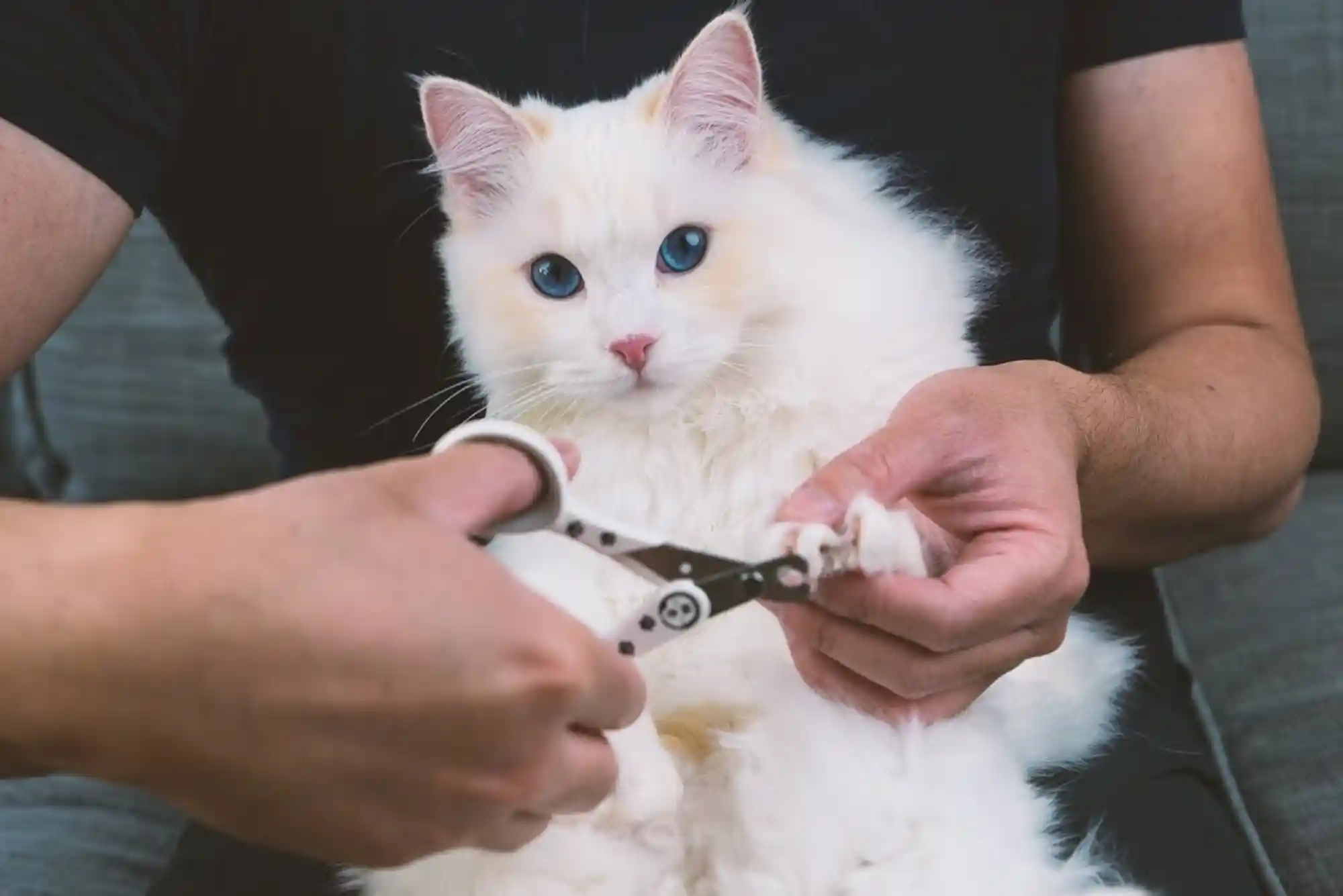
Choose sharp, purpose-made cat nail clippers. Small scissor-style clippers or suitable guillotine-style models can work well. The best choice depends on your comfort and your cat’s claw size.
Avoid using blunt household scissors because they may crush the claw. Keep styptic powder nearby in case you accidentally cut the quick. The quick contains blood vessels and nerves, so cutting it can cause pain and bleeding.
Prepare a quiet room with good lighting. Keep treats nearby to reward calm behaviour. A familiar blanket or soft towel may help your cat feel secure.
Choose a Calm Time
Timing matters when learning how to safely trim cat claws at home without stress. Choose a moment when your cat feels relaxed, perhaps after eating or playing. Avoid trimming immediately after a frightening experience or during energetic play.
Turn off loud appliances and limit interruptions. Sit comfortably so you can support your cat without awkward movements. If your cat becomes restless, pause rather than forcing the process.
Help Your Cat Become Comfortable With Paw Handling
Before using clippers, let your cat become familiar with gentle paw touches. Briefly touch a paw while your cat is relaxed, then offer a treat. Repeat this process during several short sessions.
Gradually progress to holding the paw for a second or two. Apply gentle pressure to expose one claw, then release it. Reward your cat whenever it remains comfortable.
This gradual approach creates a positive association with handling. Some cats accept trimming quickly, while others need several days or weeks of practice. Allow your cat to progress at its own pace.
Identify the Quick Before Cutting
The quick is the sensitive inner portion of the claw containing blood vessels and nerves. In light-coloured claws, it often appears pink. Cutting this area causes pain and bleeding.
Dark claws make the quick harder to identify. In these cases, remove only the sharp, curved tip in tiny increments. Examine the cut surface after each small trim and stop if you approach the sensitive inner area.
Never cut deeply simply because the claw looks long. If you cannot confidently identify a safe cutting point, ask a veterinarian or professional groomer to demonstrate the technique.
Trim One Claw at a Time
Hold your cat gently but securely. Support the paw without squeezing the toes. Press lightly above and below a toe to extend its claw.
Position the clippers perpendicular to the claw tip, avoiding the quick. Remove only a small amount from the sharp end. Then release the paw and offer praise or a treat.
Continue only while your cat remains relaxed. You can trim one or two claws and finish another day. Completing the entire set matters less than preserving your cat’s trust.
Recognise When Your Cat Needs a Break
Cats communicate discomfort through body language. Flattened ears, a rapidly moving tail, tense muscles, growling, or repeated attempts to escape indicate stress.
Stop immediately if your cat becomes distressed. Give it space to settle before trying again another day. Never punish growling, hissing, or struggling because these behaviours communicate fear.
If your cat consistently resists handling, seek professional guidance. A veterinarian can recommend suitable handling techniques or discuss other options when claw care cannot be performed safely at home.
Common Mistakes to Avoid During Cat Claw Trimming
Even well-intentioned owners can make claw trimming more stressful than necessary. Avoid rushing, restraining your cat forcefully, or attempting every claw in one sitting.
Do not cut too close to the quick. Avoid trimming when your cat is highly anxious, and never use human nail clippers if they crush or split your cat’s claws.
Declawing is not an alternative to routine trimming. It involves surgically removing the last bone of each affected toe and can cause significant complications. Appropriate scratching surfaces, regular trimming, and behavioural guidance are preferable options.
What to Do If You Accidentally Cut the Quick
Accidents can happen, especially with dark claws or sudden movements. If a claw begins bleeding, remain calm and gently apply styptic powder according to its product instructions.
If you do not have styptic powder, apply steady, gentle pressure with clean gauze. Avoid repeatedly checking the wound because this may disturb clot formation.
Contact your veterinarian if bleeding continues, the injury appears severe, or your cat shows significant pain. Seek veterinary advice if you notice swelling, discharge, or persistent limping afterward.
How to Make Claw Trimming Easier Over Time
Consistency and positive reinforcement can make future sessions more comfortable. Keep each session short and end before your cat becomes overwhelmed. Reward cooperation with a favourite treat, gentle praise, or a play session.
Provide sturdy scratching posts and suitable scratching boards. These encourage natural scratching behaviour and help maintain claw condition, although they may not eliminate the need for trimming.
Regularly inspect all four paws, including the dewclaws. Dewclaws sit higher on the front legs and may not contact scratching surfaces effectively. Consequently, they can become overgrown without obvious signs.
If your cat has painful paws, thickened claws, or a history of severe fear, consult your veterinarian before continuing home trimming.
Frequently Asked Questions
How often should you trim a cat’s claws?
Many indoor cats need trimming every two to four weeks, although some require more frequent attention. Check the claws regularly and adjust the schedule to your cat’s growth and activity. Older cats may need closer monitoring.
Is it painful to trim a cat’s claws?
Trimming the transparent, sharp tip should not hurt when performed correctly. However, cutting the quick can cause pain and bleeding. Use good lighting, trim small amounts, and stop if you cannot identify a safe cutting point.
How can I trim my cat’s claws if it hates being held?
Start with brief paw touches while your cat is relaxed. Reward calm behaviour and gradually introduce the clippers. You can trim one claw per session instead of restraining your cat for a complete trim. Seek professional help if your cat becomes aggressive or extremely frightened.
Should I trim all four paws?
Check all four paws regularly because claw growth varies. Front claws often need more attention, but rear claws can also become overgrown. Remember to inspect the dewclaws, which may not wear down naturally.
Can scratching posts replace nail trimming?
Scratching posts help cats maintain their claws and express natural behaviour. However, they do not always keep claws sufficiently short, especially in older or less active cats. Continue checking claw length and trim when necessary.
What happens if I never trim my indoor cat’s claws?
Some cats maintain suitable claw length through natural activity and scratching. Others develop long, sharp claws that snag on fabrics or curl into paw pads. Regular inspections help identify when trimming or veterinary attention is necessary.
Whitedots.ae offers a modern digital experience for users seeking reliable online solutions in the UAE. Whether you are exploring useful services, discovering new opportunities, or looking for convenient digital resources, whitedots.ae provides a platform to explore information and services with ease. Its online presence helps users connect with relevant solutions while enjoying a simple and accessible browsing experience.
Conclusion
Learning how to safely trim cat claws at home without stress starts with patience, preparation, and gentle handling. Choose suitable clippers, identify the quick, and remove only the sharp tips. Reward calm behaviour and take breaks whenever your cat feels uncomfortable.
Remember that successful claw care does not require finishing everything in one session. Building trust makes future grooming easier and helps protect your cat’s wellbeing.
Ready to improve your cat’s grooming routine? Start with a gentle paw-handling session today. If you are unsure about trimming, ask your veterinarian to demonstrate the safest technique for your cat.