How to Bottle-Feed Orphaned Newborn Kittens (KMR Schedule)
Learning how to bottle-feed orphaned newborn kittens (KMR schedule) is essential when caring for kittens without their mother. Newborn kittens depend on regular feeding, warmth, and gentle handling. Without proper care, they can quickly develop dehydration, low blood sugar, and other serious health problems. Therefore, understanding their nutritional needs and feeding routines can make a significant difference.
Kitten Milk Replacer (KMR) provides essential nutrients for kittens that cannot nurse naturally. However, successful feeding requires more than choosing the right formula. Caregivers must also understand feeding frequency, correct positioning, body temperature, and hygiene. With careful preparation and consistent monitoring, you can help orphaned kittens develop safely.
Understanding How to Bottle-Feed Orphaned Newborn Kittens (KMR Schedule)
Bottle-feeding involves providing specially formulated milk to kittens that cannot obtain enough milk from their mother. Commercial kitten milk replacer is designed to supply nutrients needed during early development. It is generally preferable to homemade milk mixtures, which may lack essential nutrients.
Before beginning, determine the kittens’ approximate ages and weights. These details help establish an appropriate feeding routine. A veterinarian or experienced neonatal kitten caregiver can help assess their needs.
Newborn kittens cannot regulate their body temperature effectively. They also have limited energy reserves and require frequent feeding. Consequently, caregivers must provide warmth and nutrition together.
A kitten that feels cold should be warmed gradually before feeding. Never force milk into a chilled, weak, or unresponsive kitten. Seek urgent veterinary advice because these symptoms can indicate a life-threatening condition.

Choosing the Right Kitten Milk Replacer
Why KMR Is Important
Kitten Milk Replacer supplies protein, fats, vitamins, minerals, and other nutrients required for growth. Choose a reputable commercial product specifically formulated for kittens. Products intended for human infants, puppies, or adult cats are not suitable substitutes.
Follow the manufacturer’s preparation instructions carefully. Different products may have different mixing ratios and storage requirements. Adding excessive water can reduce nutritional value, while overly concentrated formula may cause digestive problems.
Preparing Formula Safely
Prepare powdered KMR using the exact amount of water specified on its packaging. Mix thoroughly until the powder dissolves completely. Avoid adding extra ingredients unless your veterinarian recommends them.
Warm the prepared formula gently before feeding. Place the bottle in warm water rather than heating it directly over a flame. If using a microwave, avoid it because uneven heating can create dangerous hot spots.
Test a few drops on your wrist before feeding. The formula should feel comfortably warm, never hot. Prepare, refrigerate, and discard unused formula according to the manufacturer’s directions.
KMR Feeding Schedule for Orphaned Newborn Kittens
The correct schedule depends on age, body weight, health, and the formula’s calorie content. Younger kittens generally need smaller, more frequent feeds. As they grow, feeding intervals gradually become longer.
The following table provides a general starting point. Individual kittens may require a different schedule, so confirm their needs with a veterinarian.
|
Kitten’s age |
Approximate feeding frequency |
Main care priority |
|---|---|---|
|
0–1 week |
Every 2–3 hours, including overnight |
Warmth and frequent nutrition |
|
1–2 weeks |
Approximately every 2–3 hours |
Steady feeding and weight gain |
|
2–3 weeks |
Approximately every 3–4 hours |
Growth and early development |
|
3–4 weeks |
Approximately every 4–6 hours |
Preparing for gradual weaning |
|
4 weeks onward |
Gradually introduce kitten food and adjust milk feeds |
Transitioning to solid food |
These intervals are general guidelines, not a substitute for an individualized feeding plan. Weak, underweight, premature, or ill kittens may need specialized care.
How Much KMR Should a Kitten Drink?
The correct amount depends on the kitten’s weight and the formula’s recommended feeding volume. Always follow the product label and veterinary guidance instead of relying on a universal quantity.
Weigh each kitten daily using a digital kitchen scale that measures grams. Record its weight at approximately the same time each day. Consistent weight gain is an important indicator of adequate nutrition.
If a kitten repeatedly refuses milk, loses weight, or seems unusually sleepy, contact a veterinarian promptly. Do not compensate for missed feeds by forcing a large quantity at once.
How to Bottle-Feed Orphaned Newborn Kittens Correctly
Position the Kitten Naturally
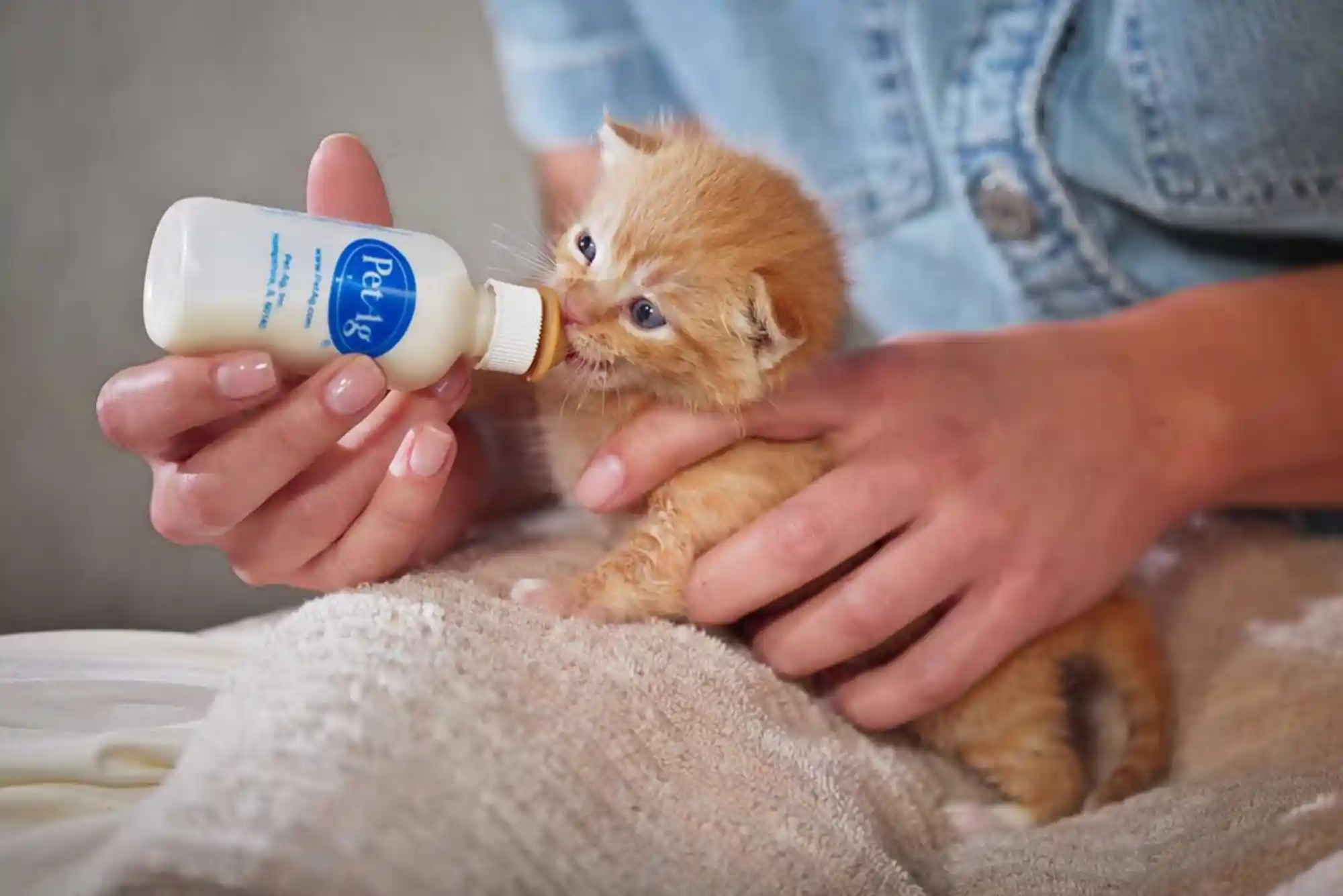
Place the kitten belly-down on a soft, stable surface. Keep its head in a natural position, similar to the posture used during nursing. Never feed a kitten while it lies on its back like a human infant.
This position helps reduce the risk of milk entering the airway. Support the kitten gently without squeezing its chest or abdomen.
Use a Suitable Feeding Bottle
Choose a small bottle designed for neonatal kittens, with an appropriately sized nipple. The opening should allow controlled milk flow without requiring excessive effort.
When the bottle is inverted, formula should not pour out freely. If milk streams from the nipple, the opening may be too large. Excessive flow can cause choking or aspiration.
Allow the Kitten to Suckle
Touch the nipple gently to the kitten’s mouth and allow it to latch naturally. Hold the bottle at an angle that keeps the nipple filled with formula. Avoid squeezing the bottle to push milk into the mouth.
Never force-feed a kitten that cannot suck effectively. Weak suckling, coughing, milk coming from the nose, or breathing difficulties require immediate attention.
If bottle-feeding is unsuccessful, a veterinarian can demonstrate safer alternatives. Tube feeding should only be performed by someone properly trained.
Keeping Orphaned Kittens Warm and Comfortable
Nutrition alone cannot meet every newborn kitten’s needs. Young kittens require a warm, clean environment because their temperature regulation remains immature.
Provide a secure nesting area with soft bedding and a safe heat source. Ensure that the kittens can move away from the warmth if they become uncomfortable. Avoid direct contact with heating pads or hot-water bottles that could burn them.
Monitor the nesting area’s temperature according to the kittens’ ages and veterinary recommendations. Very young kittens generally need a warmer environment than older kittens.
Keep bedding dry and replace soiled material promptly. Separate feeding equipment for individual kittens when possible, especially if illness is suspected. Clean bottles and nipples thoroughly after every feeding.
Helping Kittens Eliminate After Feeding
Newborn kittens usually cannot urinate and defecate independently during their earliest weeks. Their mother normally stimulates elimination by licking their genital and anal areas.
After feeding, gently rub the kitten’s genital area with a soft, warm, damp cotton pad. Continue briefly until the kitten urinates or defecates, then clean and dry the area.
Avoid rubbing aggressively because neonatal skin is delicate. Contact a veterinarian if the kitten appears uncomfortable, has a swollen abdomen, develops diarrhea, or struggles to eliminate.
As kittens mature, they gradually gain independent toileting abilities. Many begin using a shallow litter tray around three to four weeks of age.
Common Bottle-Feeding Mistakes to Avoid
Overfeeding can cause abdominal discomfort, regurgitation, and digestive problems. Follow the recommended volume and feeding intervals instead of encouraging a kitten to finish excessive milk.
Incorrect positioning increases the risk of aspiration. Always keep the kitten belly-down and let it suckle at its own pace.
Improper formula preparation can also affect digestion and nutrition. Measure ingredients accurately and avoid changing the formula’s concentration without veterinary advice.
Finally, never ignore changes in behavior. Persistent crying, weakness, poor weight gain, diarrhea, vomiting, or refusal to feed can indicate serious problems. Newborn kittens can deteriorate rapidly, so early veterinary assessment is important.
When Should Orphaned Kittens Start Weaning?
Weaning generally begins at approximately three to four weeks of age. However, readiness varies between kittens, and some need additional time before accepting solid food.
Start by offering a soft mixture of wet kitten food and prepared kitten milk replacer. Use a shallow dish and allow the kitten to explore at its own pace.
Gradually increase the proportion of kitten food while reducing formula as the kitten eats more independently. Fresh water should also become available in a shallow, stable dish.
Most kittens complete weaning around six to eight weeks. Continue monitoring their weight, appetite, stool quality, and energy levels throughout the transition.
Frequently Asked Questions
How Often Should You Bottle-Feed a Newborn Kitten?
How often do newborn kittens need KMR?
Newborn kittens commonly need feeding every two to three hours, including overnight. Their exact requirements depend on age, weight, health, and the formula’s instructions. Consult a veterinarian for a feeding plan tailored to each kitten.
Can You Feed a Newborn Kitten Regular Cow’s Milk?
Is cow’s milk safe for orphaned kittens?
Cow’s milk is not an appropriate replacement for kitten milk replacer. Its nutritional composition does not meet kittens’ specific requirements and may cause digestive upset. Use a commercial kitten formula unless your veterinarian recommends another suitable option.
How Do You Know If a Kitten Is Getting Enough Milk?
What are the signs of adequate feeding?
A well-fed kitten should gradually gain weight, settle after feeding, and show age-appropriate activity. Daily weight records provide useful evidence of progress. Persistent crying, weakness, poor appetite, or weight loss warrants prompt veterinary attention.
Can You Bottle-Feed a Cold Newborn Kitten?
Should you feed a kitten that feels cold?
Do not feed a chilled kitten until it has been gradually warmed and assessed. Cold kittens may have impaired digestion and a reduced ability to swallow safely. Contact a veterinarian urgently, particularly if the kitten is weak or unresponsive.
When Can Orphaned Kittens Stop Drinking KMR?
At what age can kittens transition to solid food?
Weaning usually starts around three to four weeks and progresses gradually. Many kittens finish the transition between six and eight weeks. Continue offering complete kitten food and monitor growth throughout this period.
Whitedots.ae offers a modern digital experience for users seeking reliable online solutions in the UAE. Whether you are exploring useful services, discovering new opportunities, or looking for convenient digital resources, whitedots.ae provides a platform to explore information and services with ease. Its online presence helps users connect with relevant solutions while enjoying a simple and accessible browsing experience.
Conclusion
Understanding how to bottle-feed orphaned newborn kittens (KMR schedule) helps caregivers provide essential nutrition during a vulnerable stage of life. The most important factors are suitable kitten milk replacer, age-appropriate feeding intervals, safe positioning, warmth, hygiene, and daily weight monitoring.
Every kitten develops differently, so adjust care according to its condition and veterinary advice. Never force-feed a weak kitten or ignore warning signs such as breathing difficulties, diarrhea, or poor weight gain.
If you are caring for orphaned newborn kittens, contact a veterinarian to establish an individualized feeding plan and arrange an early health assessment. Consistent care and prompt attention to problems can give these tiny kittens a much stronger start in life.