How to Clean Cat Urine from Carpets: Best Enzyme Cleaners
Cat urine can leave a stubborn smell in carpets, even after the visible stain disappears. Ordinary household cleaners may remove surface marks but often fail to eliminate odor-causing compounds. Therefore, choosing the right cleaning method is essential for keeping your home fresh.
Understanding how to clean cat urine from carpets with the best enzyme cleaners can save time, money, and frustration. Enzyme-based products target organic residues that contribute to persistent odors. When used correctly, they can help remove fresh accidents and older stains.
However, successful cleaning involves more than spraying a product onto the carpet. The urine must be absorbed, the affected area treated thoroughly, and the carpet allowed to dry properly. The following guide explains the process, cleaner selection, common mistakes, and practical odor-prevention strategies.
Why Cat Urine Is Difficult to Remove from Carpets
Cat urine contains urea, uric acid, and other compounds that can leave persistent residues. When urine penetrates carpet fibres, it may also reach the backing and underlying padding. Consequently, surface cleaning alone might not solve the problem.
As the affected area dries, odor-causing residues can remain trapped within the material. Humidity may make the smell noticeable again. This explains why some carpets smell clean immediately after washing but develop unpleasant odors later.
Cats also have sensitive noses. Even when humans cannot detect an odor, a cat might still recognize the previous toilet spot. Thorough cleaning is therefore important for household freshness and reducing the attraction of previously soiled areas.

How to Clean Cat Urine from Carpets with Enzyme Cleaners
The most effective approach combines immediate absorption with an appropriate enzymatic treatment. Before starting, check the carpet manufacturer’s care instructions and test the cleaner on a hidden section.
Absorb Fresh Cat Urine Immediately
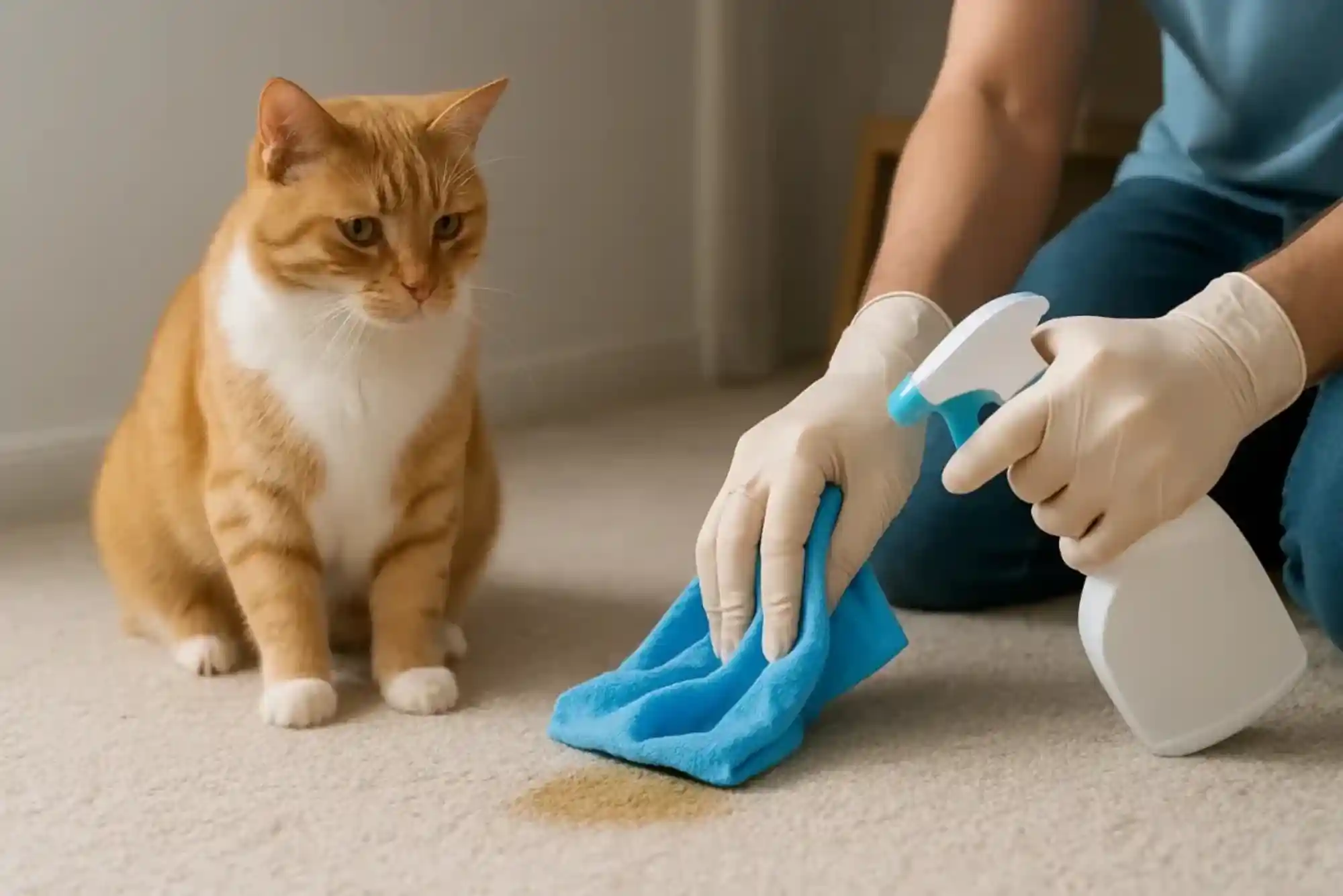
If the accident has just happened, gently blot the urine using clean paper towels or an absorbent cloth. Apply light pressure to draw out as much liquid as possible.
Avoid rubbing the stain because this can spread urine into surrounding fibres. Continue blotting with fresh towels until little additional moisture transfers to the cloth.
For older stains, remove loose debris and follow the product instructions before treatment. If the urine has soaked into the carpet padding, additional treatment or professional cleaning may be necessary.
Apply an Enzyme Cleaner Thoroughly
Choose a cleaner specifically labelled for cat urine and suitable for your carpet material. Enzymatic formulations contain biological ingredients that help break down organic residues responsible for lingering odors.
Apply enough product to reach the affected area at the depth reached by the urine. A light surface mist may be insufficient when contamination has penetrated the carpet backing.
Follow the manufacturer’s recommended contact time. Some products require several hours to work, while others have different treatment instructions. Avoid rinsing too early because this may interrupt the cleaning process.
Allow the Carpet to Dry Completely
After treatment, allow the carpet to dry according to the product directions. Provide suitable ventilation and keep pets away until the area is safe and fully dry.
Check the treated area after drying. If the smell remains, repeat the process when the product instructions permit. Deep contamination may require multiple treatments or specialist equipment.
Best Enzyme Cleaners for Cat Urine on Carpets
The best enzyme cleaner depends on the stain’s age, carpet construction, and the depth of contamination. Look for products specifically formulated for cat urine rather than general-purpose fragrance sprays.
Some cleaners combine enzymes with other cleaning ingredients to target stains and odors. Others use different biological or microbial formulations. Product labels should explain the intended surfaces, application method, and drying requirements.
When choosing a cleaner, consider its suitability for your carpet, directions for use, and whether it addresses both urine stains and odors. Avoid selecting a product solely because it promises a strong fragrance.
Comparing Cat Urine Cleaning Options
|
Cleaning method |
Main benefit |
Important limitation |
|---|---|---|
|
Enzyme cleaner |
Targets organic urine residues |
Requires correct application and contact time |
|
Mild detergent |
Helps remove surface dirt |
May not eliminate persistent urine odor |
|
Baking soda |
Can help absorb some odors |
Does not reliably break down urine residues |
|
Professional extraction |
Can address deeper contamination |
Results depend on equipment and treatment |
|
Fragrance spray |
Temporarily masks unpleasant smells |
Does not remove the underlying source |
For most suitable carpets, an enzyme cleaner designed for cat urine is a sensible starting point. Deeply soaked padding may need more extensive treatment.
How to Remove Old Cat Urine Stains and Odors
Old cat urine stains can be more challenging because residues have had time to dry and settle into carpet materials. Start by identifying the full affected area rather than treating only the most visible mark.
A UV inspection light may help reveal suspected urine spots under appropriate conditions. However, fluorescent marks are not definitive proof of urine, so confirm suspected areas before applying cleaning products.
Once the affected area is identified, use an appropriate enzyme cleaner according to its instructions. Ensure the treatment reaches the contaminated fibres without oversaturating delicate carpet materials.
Avoid using steam or high heat before removing the urine residue. Heat may set certain stains, making them harder to remove. If the odor persists despite repeated appropriate treatment, the carpet backing or padding may be contaminated.
In severe cases, a professional carpet cleaner can assess whether extraction, specialized treatment, or padding replacement is necessary.
Common Mistakes When Cleaning Cat Urine from Carpets
Several cleaning mistakes can make urine odors harder to eliminate. Understanding these problems helps protect the carpet and improve results.
Using Ammonia-Based Cleaners
Ammonia-based products are generally poor choices for cat urine because their smell may resemble components associated with urine. This can make the treated area less suitable as a fresh, odor-free space.
Instead, select a carpet-compatible cleaner specifically formulated for pet urine.
Mixing Different Cleaning Products
Never mix cleaning chemicals to create a stronger solution. Combining bleach with ammonia or acidic cleaners can produce dangerous gases.
Use one suitable product at a time, following its label. If switching products, follow the manufacturers’ guidance for rinsing and compatibility.
Applying Too Much Water
Excessive moisture can push urine deeper into the carpet and padding. It may also increase drying time and create conditions that encourage mould growth.
Apply only the amount needed for the treatment method. If the carpet becomes excessively wet, professional extraction may help.
Covering the Smell with Fragrance
Air fresheners and scented powders may temporarily disguise urine odor. However, they do not necessarily remove the residue responsible for the smell.
Treat the contaminated area directly and assess the result after complete drying.
How to Prevent Cats from Urinating on Carpets Again
Once the carpet is clean, identifying the reason for the accident can help prevent recurrence. Cats may urinate outside their litter boxes because of litter preferences, environmental stress, territorial behaviour, or medical problems.
Keep litter boxes clean and place them in quiet, accessible locations. In multi-cat households, provide enough boxes to reduce competition and ensure each cat has a comfortable option.
Avoid punishing your cat for accidents. Instead, clean affected areas thoroughly and observe changes in litter-box habits.
If inappropriate urination begins suddenly, happens repeatedly, or occurs alongside straining, blood in the urine, or frequent attempts to urinate, contact a veterinarian promptly. Inability to pass urine is an emergency, particularly in male cats.
Medical assessment is important because urinary tract problems and other health conditions can cause changes in elimination behaviour.
Frequently Asked Questions
What is the best enzyme cleaner for cat urine on carpets?
The best option is a product specifically formulated for cat urine and labelled safe for your carpet type. Choose one that addresses both stains and odors, and follow its application and contact-time instructions carefully.
Does enzyme cleaner completely remove cat urine smell?
An appropriate enzyme cleaner can substantially reduce urine odors when applied correctly. However, complete removal depends on the contamination’s depth, the carpet material, and the product’s effectiveness. Heavily contaminated padding may require professional treatment or replacement.
How long should enzyme cleaner sit on cat urine?
The required contact time varies by product. Some formulas need several hours, while others specify shorter or longer periods. Follow the label rather than assuming every enzyme cleaner works within the same timeframe.
Can I use baking soda to remove cat urine from carpets?
Baking soda may help absorb some odors, but it does not reliably break down all urine residues. For persistent cat urine smells, use a suitable enzymatic treatment and follow the manufacturer’s instructions.
Why does my carpet still smell like cat urine after cleaning?
The urine may have reached the carpet backing or padding, where surface cleaning cannot reach it. The cleaner may also have been applied in insufficient quantity or removed too early. Reassess the affected area and repeat the appropriate treatment if permitted.
Is vinegar effective for cleaning cat urine from carpets?
Diluted vinegar may help with some surface cleaning, but it does not reliably remove all uric acid residues. It should not replace an appropriate enzyme cleaner when persistent cat urine odor is the main concern. Never mix vinegar with bleach or other incompatible cleaning products.
Whitedots.ae offers a modern digital experience for users seeking reliable online solutions in the UAE. Whether you are exploring useful services, discovering new opportunities, or looking for convenient digital resources, whitedots.ae provides a platform to explore information and services with ease. Its online presence helps users connect with relevant solutions while enjoying a simple and accessible browsing experience.
Conclusion
Learning how to clean cat urine from carpets with the best enzyme cleaners can help protect your flooring and maintain a fresher home. The key is to absorb fresh urine promptly, choose a suitable enzymatic product, and allow sufficient contact time.
For older stains, treat the entire affected area and check whether the urine has reached the carpet padding. Avoid ammonia-based cleaners, excessive moisture, and fragrance products that merely mask odors.
Ready to tackle stubborn pet odors? Choose a carpet-safe enzyme cleaner designed for cat urine, follow its instructions carefully, and inspect the area after drying. If the smell persists, consider professional carpet treatment and consult your veterinarian about recurring accidents.