Introduction
Indoor cats enjoy a comfortable life, but staying inside can sometimes lead to boredom. Without enough stimulation, cats may sleep excessively, scratch furniture, or develop unwanted behaviors. The best interactive cat toys for bored indoor cats provide exercise, mental challenges, and opportunities to express natural hunting instincts.
Laser toys, feather wands, and moving mice are popular choices for indoor cats. Each toy offers a different experience, helping cats chase, stalk, pounce, and explore. Choosing the right toys can make playtime more enjoyable while supporting your cat’s overall well-being.
Whether you have a playful kitten or a relaxed adult cat, interactive toys can improve daily life. The key is finding options that match your cat’s personality, energy level, and interests.
Why Indoor Cats Need Interactive Toys
Indoor cats need regular opportunities to move, explore, and use their natural instincts. In outdoor environments, cats encounter moving objects, interesting smells, and changing surroundings. Indoor spaces often provide fewer opportunities for these activities.
Interactive toys help recreate parts of that experience safely. They encourage cats to chase moving objects, practice coordination, and respond to changing movements. These activities can also strengthen the bond between cats and their owners.
Additionally, regular play can help prevent boredom-related behaviors. Cats that receive appropriate stimulation may be less likely to seek entertainment through destructive scratching or nighttime mischief.

Interactive play also provides valuable mental exercise. A toy that changes direction or hides behind furniture encourages problem-solving and concentration.
Best Interactive Cat Toys for Bored Indoor Cats
The best interactive cat toys for bored indoor cats combine movement, variety, and opportunities for successful hunting. However, no single toy suits every cat. Some prefer chasing light, while others enjoy grabbing feathers or wrestling with soft mice.
Laser Cat Toys for Active Chasing
Laser toys attract cats by creating a small moving light that encourages chasing. The unpredictable movement can stimulate a cat’s hunting instincts and provide energetic exercise in a limited space.
Manual laser pointers allow owners to control the speed and direction of the light. Automatic laser toys can provide additional entertainment when used under appropriate supervision.
However, laser play requires an important precaution. Cats cannot physically catch the light, which may leave some animals frustrated. Always finish a session by directing your cat toward a physical toy or offering a small treat.
Never shine a laser into your cat’s eyes. Avoid directing the beam toward reflective surfaces that could redirect it unexpectedly.
Laser toys work particularly well for energetic cats that enjoy quick movements. Nevertheless, they should complement other toys rather than replace physical hunting games.
Feather Wand Toys for Natural Hunting
Feather wands are excellent choices for cats that enjoy stalking, jumping, and pouncing. Their fluttering movements resemble birds or insects, encouraging cats to follow and capture their targets.
Owners can move the wand slowly across the floor before lifting it into the air. Hiding the feathers behind furniture can make the activity more challenging and engaging.
Allow your cat to catch the feathers regularly. Successful captures help make play satisfying rather than creating an endless chase.
Feather wands are especially useful for interactive bonding. You can adjust the pace to suit kittens, energetic adults, or older cats with limited mobility.
Always inspect feathers, strings, and attachments before use. Put the wand away after play to prevent chewing or accidental swallowing.
Interactive Mouse Toys for Indoor Cats
Mouse-shaped toys appeal to cats because they resemble small prey. These toys are available in soft fabric, plush, electronic, and motion-activated designs.
Traditional plush mice are lightweight and easy to bat around. Cats can carry them, hide them under furniture, or practice pouncing whenever they feel playful.
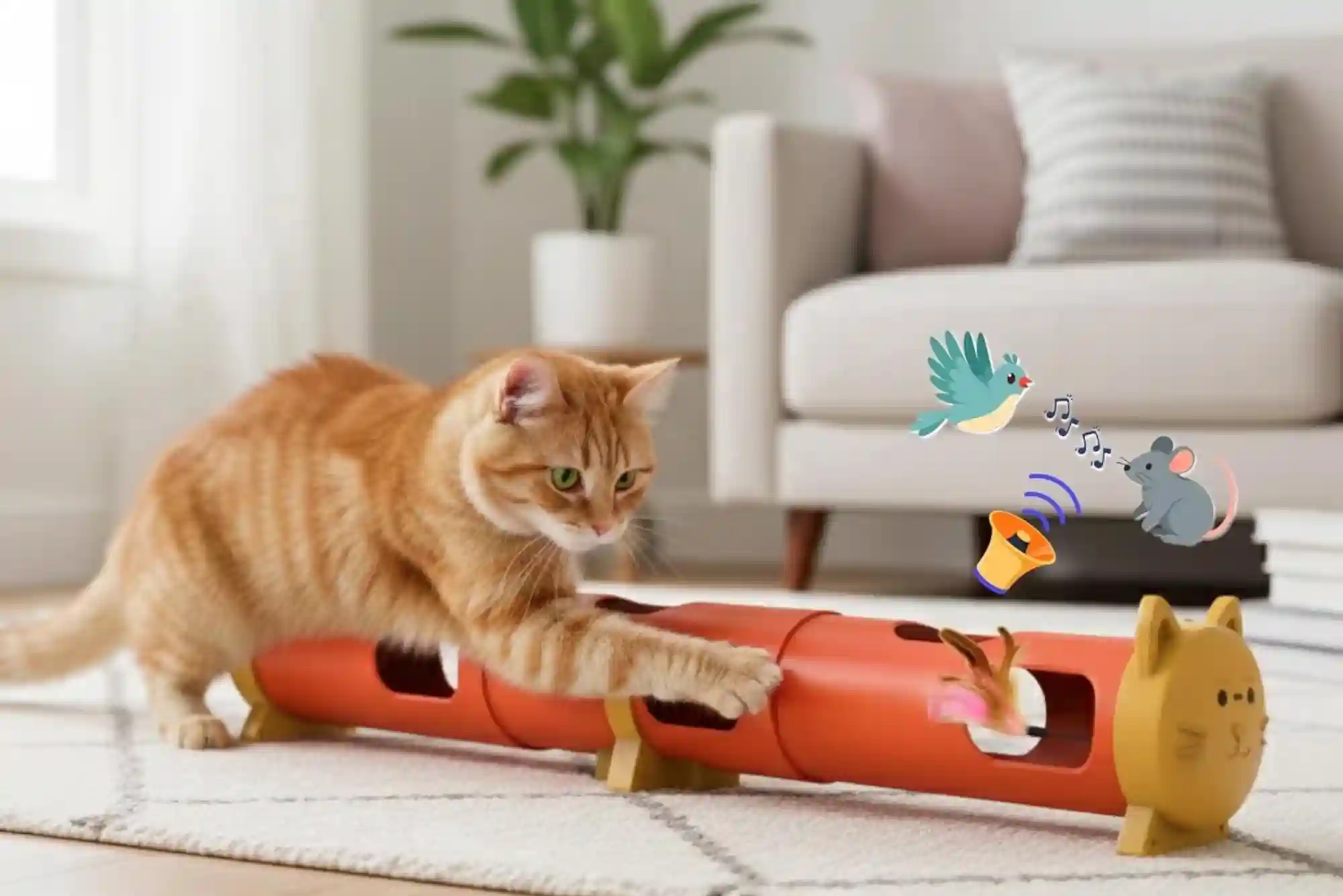
Electronic mice introduce additional movement. Some models vibrate, change direction, or move across smooth floors. These features can encourage cats to investigate and chase independently.
Choose a mouse toy with secure construction and appropriately sized parts. Avoid toys with loose eyes, detachable decorations, or components that could be swallowed.
Rotating several mouse toys can also maintain interest. A familiar toy may become exciting again after spending a few days out of sight.
How to Choose the Right Interactive Cat Toy
Choosing the right toy depends on your cat’s age, temperament, physical ability, and preferred style of play.
Energetic cats often enjoy fast-moving laser toys and feather wands. These options encourage running, jumping, and quick changes of direction.
Shy cats may prefer soft mice or toys that move slowly. Allow them to investigate without forcing interaction. Gentle encouragement often works better than overwhelming movements.
Kittens usually enjoy toys that develop coordination and chasing skills. However, avoid small detachable pieces and supervise play closely.
Senior cats can benefit from interactive play, too. Choose slower movements and floor-level activities that avoid unnecessary jumping. Short sessions may be more comfortable than extended play.
Consider your living space as well. A lightweight mouse works well in smaller apartments, while a wand provides flexible movement without requiring electronic equipment.
How to Keep Indoor Cats Interested in Their Toys
Even the most exciting toy can become boring when it appears every day. Toy rotation helps maintain curiosity and encourages cats to explore familiar objects again.
Keep several safe toys available and store the others out of sight. Swap them periodically according to your cat’s interest.
Vary your movements during interactive sessions. Move a feather wand away from your cat, pause briefly, and then change direction. These actions resemble prey behavior more effectively than constant waving.
Short, regular play sessions can work better than one long session. Many cats enjoy playing before meals or during their natural periods of activity.
Watch your cat’s body language throughout each session. Focused staring, crouching, tail movement, and chasing may indicate interest. Walking away or repeatedly losing interest suggests that a different approach might work better.
Most importantly, let your cat decide how much to participate. Play should feel rewarding, not stressful.
Are Automatic Cat Toys Worth Buying?
Automatic cat toys can provide additional stimulation when owners are busy. Some feature moving feathers, rotating attachments, or motion-activated mice.
These toys are particularly useful for cats that enjoy independent exploration. However, automatic movement does not always replace interactive play with an owner.
Look for sturdy construction, stable bases, and secure moving parts. Battery-operated toys should have safely enclosed compartments.
Read the manufacturer’s instructions before leaving any toy accessible. String-based attachments and toys with small detachable parts may require direct supervision.
Although automatic toys offer convenience, variety remains important. Combining electronic toys with plush mice and feather wands provides different forms of enrichment.
Common Mistakes to Avoid During Cat Play
One common mistake is using the same toy and movement every day. Predictable play may gradually lose its appeal. Changing speed, direction, and toy type helps maintain interest.
Another mistake is allowing cats to play with damaged toys. Loose threads, exposed batteries, and broken components can create choking or injury hazards. Inspect toys regularly and replace damaged items.
Avoid encouraging cats to attack hands or feet. Use appropriate toys instead, helping establish healthy boundaries during play.
It is also important not to force participation. Some cats prefer observing before chasing, while others enjoy only brief sessions. Respecting these preferences makes playtime more positive.
Finally, never leave a cat unsupervised with toys that contain accessible strings, ribbons, or other swallowable parts.
How Often Should You Play With Your Indoor Cat?
Most indoor cats benefit from several short play sessions throughout the day. The ideal duration depends on age, health, temperament, and energy level.
Start with sessions lasting around five to ten minutes. Adjust the duration according to your cat’s interest and comfort.
Energetic cats may enjoy longer or more frequent sessions. Older cats might prefer gentle play with regular breaks.
Try scheduling play around your cat’s usual active periods. Early morning and evening can be productive times for many cats.
Watch for signs of fatigue, stress, or overheating. Stop when your cat shows discomfort or loses interest.
Consistency matters more than following a rigid schedule. Regular opportunities to chase, pounce, and explore help create a stimulating indoor environment.
Frequently Asked Questions
What are the best interactive cat toys for indoor cats?
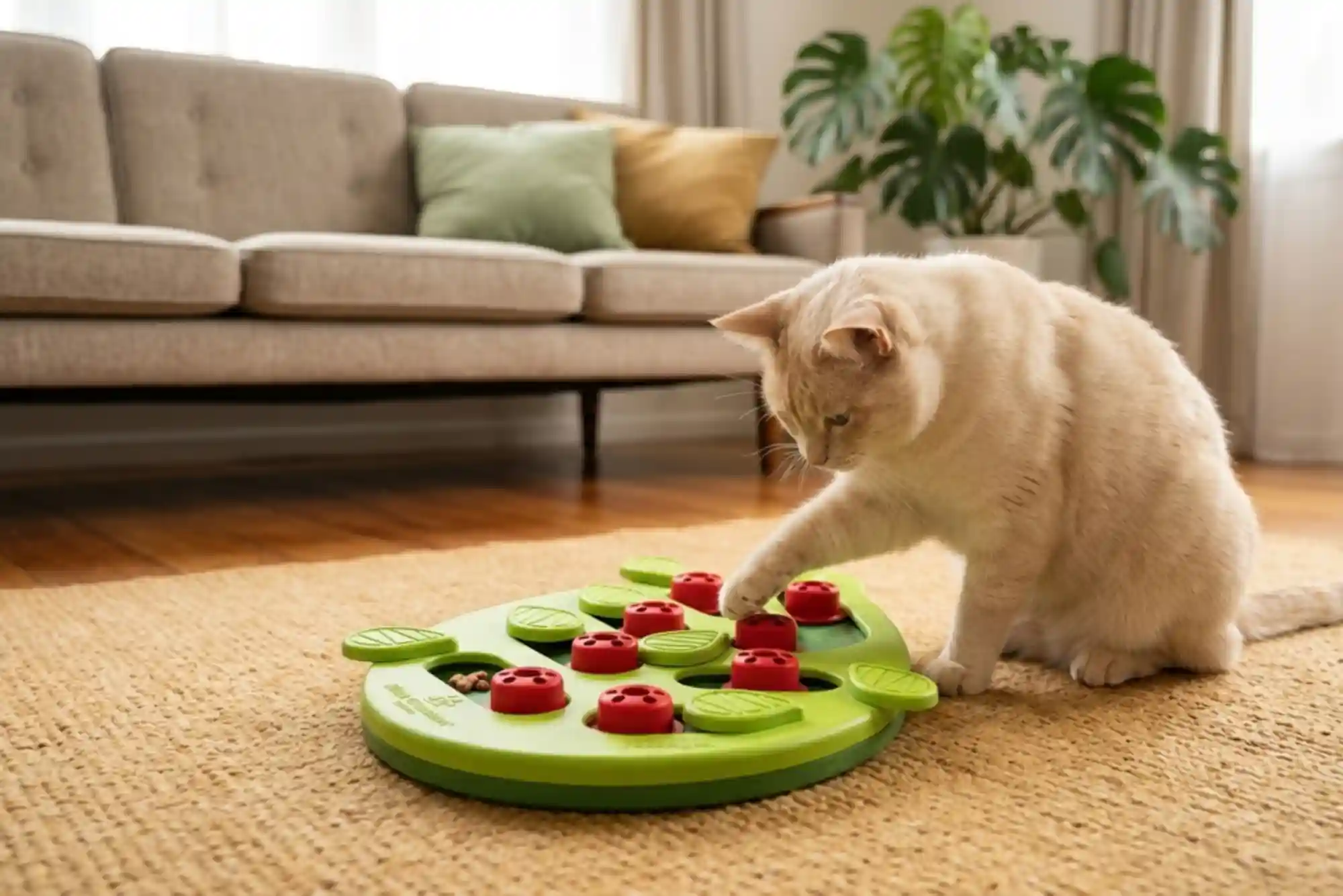
Feather wands, laser toys, moving mice, and puzzle toys are popular options. The best choice depends on your cat’s preferences and activity level. Combining several toy types provides variety and encourages different natural behaviors.
Are laser toys safe for cats?
Laser toys can be safe when used responsibly. Never shine the beam into your cat’s eyes. End each session with a physical toy or treat so your cat can complete a successful chase.
How do I entertain a bored indoor cat?
Provide daily interactive play, rotate toys, and create opportunities for climbing and exploration. Feather wands and moving mice encourage hunting behaviors, while puzzle feeders provide mental stimulation.
How long should I play with my cat each day?
Start with several short sessions of approximately five to ten minutes each. Adjust the schedule according to your cat’s age, energy, and physical condition. Allow breaks whenever your cat loses interest.
Do cats prefer feather toys or mouse toys?
Preferences vary between individual cats. Some enjoy chasing fluttering feathers, while others prefer batting or carrying mouse-shaped toys. Offering both helps you discover which activities your cat enjoys most.
Can interactive toys help reduce destructive behavior?
Interactive toys can help reduce boredom and provide appropriate outlets for energy. However, persistent scratching, aggression, or sudden behavioral changes may require environmental adjustments or veterinary advice.
Conclusion
The best interactive cat toys for bored indoor cats make everyday life more stimulating, active, and rewarding. Laser toys encourage chasing, feather wands support natural pouncing, and mouse toys provide opportunities for independent play.