
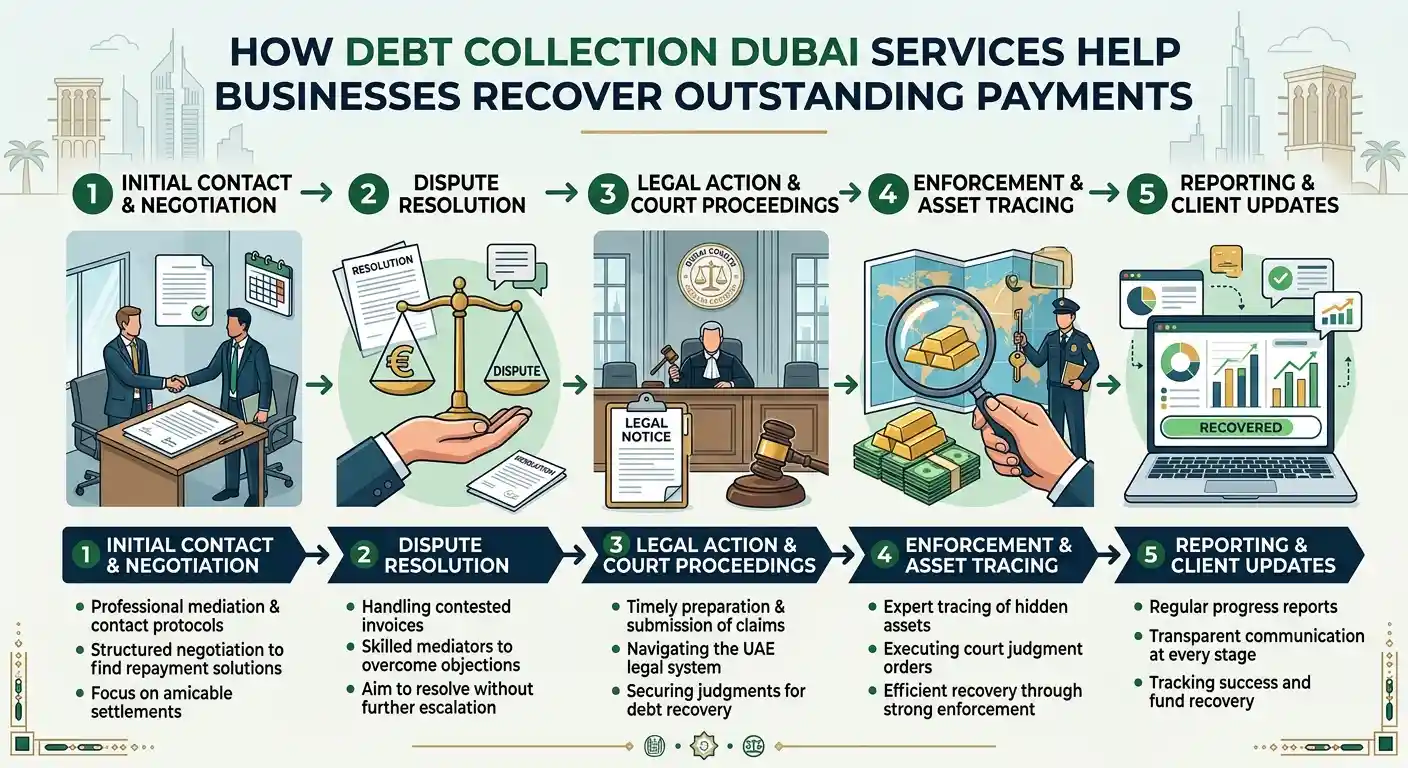
Debt recovery is an important part of managing a successful business. When customers, clients, or commercial partners fail to pay their invoices on time, businesses may experience cash flow problems, operational difficulties, and financial uncertainty. Debt Collection Dubai services help businesses address unpaid debts through professional communication, payment negotiations, legal documentation, and appropriate recovery procedures.
Dubai is a major commercial center where businesses frequently deal with local and international customers. Although many transactions are completed successfully, payment disputes and overdue invoices can arise in commercial relationships. Understanding the available debt recovery options helps creditors protect their financial interests while complying with applicable UAE laws.
- What Is Debt Collection in Dubai?
Debt collection refers to the process of recovering money owed by an individual, customer, company, or commercial partner. The outstanding amount may arise from unpaid invoices, loans, contractual obligations, supplied goods, professional services, or other financial commitments.
Debt Collection Dubai services can help creditors assess outstanding balances, communicate with debtors, negotiate repayment arrangements, and determine whether legal action may be appropriate.
The recovery process generally begins by reviewing the original agreement, invoices, payment history, correspondence, and other evidence establishing the debt. This assessment helps identify the amount outstanding and whether there are disputes concerning payment terms or the quality of goods and services.
The appropriate recovery strategy depends on the circumstances of the debt, the available evidence, and the debtor’s willingness and ability to pay.

- Why Is Professional Debt Collection Important for Businesses?
Unpaid debts can affect a company’s ability to pay employees, suppliers, rent, and other operating expenses. Even a profitable business may experience financial pressure when customers delay significant payments.
Professional debt recovery assistance can help businesses establish a structured approach to overdue accounts rather than relying on repeated informal reminders.
Experienced recovery professionals may help creditors:
- Organize invoices and supporting documentation.
- Communicate clearly with debtors about overdue balances.
- Negotiate realistic repayment arrangements.
- Identify disputed amounts or contractual issues.
- Evaluate potential legal remedies.
- Reduce the time employees spend following up on unpaid accounts.
A structured process can also help businesses maintain accurate financial records and make better decisions about credit management.
However, recovery cannot be guaranteed. The outcome may depend on the strength of the evidence, the debtor’s financial position, and the applicable legal procedures.
- What Types of Debts Can Be Recovered in Dubai?
Debt recovery may involve different types of financial obligations. The available procedure depends on the nature of the transaction and the legal basis for the claim.
Common examples include:
Commercial invoice debts: Businesses may seek payment for goods delivered or services provided under an agreement.
Unpaid contractual amounts: A creditor may pursue money due under a valid contract when the other party fails to meet its payment obligations.
Outstanding loans: Individuals or businesses may seek recovery of money advanced under a loan arrangement, subject to applicable legal requirements.
Unpaid rent or commercial charges: Landlords and commercial property operators may have recovery options for overdue amounts, depending on the relevant tenancy arrangements.
Supplier and distributor debts: Businesses may need assistance recovering payment for products supplied under commercial agreements.
Professional service fees: Consultants, contractors, agencies, and other service providers may seek payment for completed work.
Before pursuing any claim, the creditor should determine whether the debt is due, properly documented, and subject to any contractual conditions or legitimate dispute.
- How Does the Debt Collection Process Work?
The debt recovery process usually follows several stages, although the exact steps vary according to the circumstances.
Step 1: Review the Debt
The first step is to establish the outstanding amount and examine the documents supporting the claim. Relevant records may include contracts, invoices, purchase orders, delivery receipts, account statements, and written acknowledgements of the debt.
The review may also identify payments already received, disputed charges, or contractual provisions that affect the recovery process.
Step 2: Contact the Debtor
The creditor or its representative contacts the debtor to explain the outstanding balance and request payment. A written demand can provide a clear record of the amount claimed, the relevant invoices, and the requested payment deadline.
Professional communication is important because the debtor may have overlooked the invoice, experienced temporary financial difficulties, or raised a genuine concern about the transaction.
Step 3: Negotiate a Settlement
Where appropriate, the parties may discuss a payment plan, partial settlement, or another mutually acceptable arrangement.
Any agreement should clearly state the payment dates, amounts, consequences of missed payments, and any other relevant terms. Legal advice may be appropriate before accepting a discounted settlement or agreeing to waive part of the debt.
Step 4: Consider Legal Proceedings
If reasonable recovery efforts fail, the creditor may consider pursuing a formal legal remedy. The appropriate court, procedure, and available remedies depend on the claim, the parties, any jurisdiction agreement, and the applicable law.
A lawyer can assess the evidence and explain the potential costs, risks, and likely steps involved before proceedings begin.
- Which Documents Are Needed for Debt Recovery?
Proper documentation is essential when seeking to recover unpaid money. The exact requirements depend on the type of debt and the procedure used.
Commonly relevant documents include:
- The signed contract or written agreement.
- Outstanding invoices and account statements.
- Purchase orders or service confirmations.
- Delivery notes or evidence that services were completed.
- Emails and messages discussing payment.
- Records of previous payments.
- Written acknowledgements of the outstanding balance.
- Relevant company and debtor identification details.
For international transactions, additional documents may be required to establish the contractual relationship, identify the responsible party, or determine the appropriate jurisdiction.
Creditors should preserve original records and maintain a clear calculation of the amount claimed. Inconsistent figures or incomplete documentation can complicate negotiations and legal proceedings.
- Can a Lawyer Help With Debt Collection Dubai Cases?
Yes. A lawyer familiar with the relevant UAE legal framework can assess the debt, review contractual terms, prepare formal demands, advise on settlement options, and explain whether legal proceedings may be appropriate.
Legal assistance can be particularly valuable when a debtor disputes the amount owed, challenges the validity of an agreement, or raises questions about responsibility for the payment.
A lawyer may also help determine whether the matter falls within the jurisdiction of a particular UAE court or another competent forum. Certain disputes may involve specialized procedures, contractual arbitration clauses, or cross-border considerations.
The most suitable approach depends on the circumstances. In some cases, a negotiated settlement may be more practical than litigation, while other cases may require formal legal action to protect the creditor’s interests.
- What Happens if a Debtor Refuses to Pay?
If a debtor refuses to pay, the creditor should first establish whether the refusal is based on a genuine dispute or an unwillingness to honour the obligation.
Where the debt is supported by reliable evidence and payment remains outstanding, the creditor may consider issuing a formal demand and evaluating the available legal remedies.
Depending on the applicable procedure, a creditor may seek a judgment or another enforceable decision. Enforcement measures, where legally available, are subject to the relevant legal requirements and the circumstances of the case.
It is important not to assume that obtaining a judgment automatically results in immediate payment. Recovery may also depend on identifying assets, locating the debtor, and complying with the applicable enforcement process.
Creditors should avoid harassment, threats, misleading statements, or unauthorized access to personal information during collection efforts. Recovery activities must comply with applicable laws.
- How Long Does Debt Recovery Take in Dubai?
There is no single timeline for every debt collection matter. Some debts are settled shortly after a formal payment request, while others require extensive negotiations or legal proceedings.
Factors affecting the timeline include the amount owed, the quality of the documentation, the debtor’s response, the existence of a genuine dispute, and the complexity of the legal process.
Cross-border claims may require additional steps to establish jurisdiction, serve documents, or pursue enforcement in another country.
Businesses can improve their position by keeping accurate records, responding promptly to requests for evidence, and seeking advice when payment delays become significant. However, no recovery provider can reliably guarantee a specific outcome or completion date in every case.
- How Can Businesses Prevent Future Payment Problems?
Although professional recovery services can help address overdue debts, prevention is often more effective than attempting to recover money after a payment default.
Businesses can strengthen their credit management procedures by taking several practical steps.
First, conduct appropriate checks before offering credit to a new customer. Second, use written contracts that clearly explain payment deadlines, invoicing procedures, and the consequences of non-payment. Third, issue invoices promptly and maintain accurate account records.
Companies should also monitor overdue accounts regularly and follow up before balances become seriously delinquent. Where commercially appropriate, they may consider deposits, staged payments, credit limits, or other safeguards.
For international transactions, businesses should clarify the governing law, dispute-resolution arrangements, and the parties’ legal identities before entering into significant commitments.
- How Should You Choose a Debt Collection Service in Dubai?
Choosing an appropriate service provider requires consideration of experience, transparency, communication, and legal compliance.
Ask how the provider assesses claims, what documentation is needed, how fees are calculated, and whether legal representation is available when required. You should also clarify whether the service focuses on negotiated recovery, legal assistance, or both.
Avoid providers that promise guaranteed recovery without examining the facts. A credible assessment should consider the debt’s documentation, the debtor’s circumstances, potential legal obstacles, and the costs involved.
Before signing an engagement agreement, review the fee structure and understand which services are included. This helps businesses make informed decisions about whether professional recovery assistance is commercially worthwhile.
Conclusion
Debt Collection Dubai services can help businesses address overdue invoices, unpaid contractual obligations, commercial debts, and other outstanding payments. By reviewing evidence, communicating with debtors, negotiating settlements, and considering appropriate legal remedies, creditors can pursue recovery through a more organized process.
The best approach depends on the debt’s nature, the available documentation, and the debtor’s response. Businesses should maintain accurate financial records, use clear contracts, and seek qualified legal advice when disputes arise or informal recovery efforts fail.
Taking early action and implementing effective credit management procedures can help protect cash flow, reduce financial uncertainty, and support healthier commercial relationships.
Disclaimer: This article provides general information and does not constitute legal or financial advice. Debt recovery procedures, deadlines, and remedies depend on the applicable UAE laws, the nature of the claim, and the circumstances of each case.