Introduction
Choosing the right diet is one of the most important decisions a cat owner can make. When comparing wet vs dry cat food, the answer is rarely as simple as declaring one option universally better. Both can provide complete and balanced nutrition when properly formulated, but they differ considerably in moisture content, calorie density, texture, convenience, and potential benefits for different cats.
For feline longevity, the bigger picture matters. A nutritious diet should help maintain a healthy body weight, support muscle mass, provide essential nutrients, and encourage adequate hydration throughout life. Your cat’s age, health, lifestyle, preferences, and veterinary needs should all influence the decision.
This guide explains the practical differences between wet and dry diets and how each may contribute to long-term feline health.
Wet vs Dry Cat Food: Understanding the Basics
The most obvious difference between wet and dry food is moisture. Canned or pouch-based wet food generally contains substantially more water than kibble. Dry food, meanwhile, has had most of its moisture removed during manufacturing, which makes it concentrated, lightweight, and easy to store.
Neither format is automatically unhealthy. The nutritional quality of the specific food matters more than whether it comes in a can, pouch, or bag.
What Is Wet Cat Food?
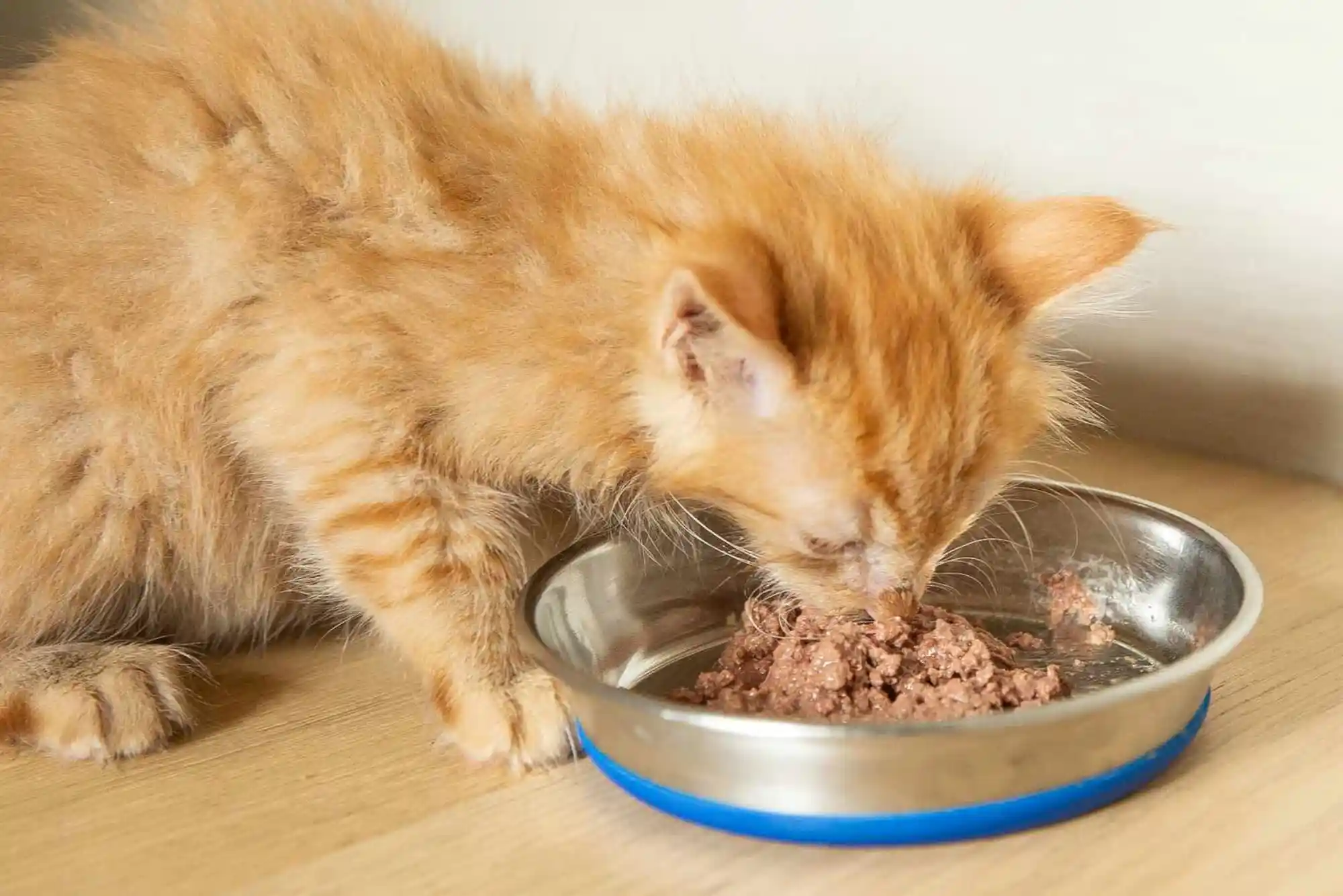
Wet cat food includes canned foods, trays, and pouches with high moisture content. It can range from pâté to minced, shredded, or chunks-in-gravy textures.
Because it contains significant water, wet food can contribute to a cat’s daily fluid intake. This can be especially useful for cats that do not naturally drink much from a bowl.
Wet diets can also be highly palatable, making them useful for cats with reduced appetites or those that are particularly selective about food texture.
What Is Dry Cat Food?
Dry cat food, commonly called kibble, is manufactured into small pieces with relatively low moisture content. Its low water content gives it a long shelf life and makes portioning straightforward.
Dry food is also convenient for owners. It is easy to measure, transport, and store, and some cats prefer its crunchy texture.
However, because kibble contains little water compared with wet food, cats eating primarily dry diets need reliable access to fresh drinking water.
How Wet vs Dry Cat Food Affects Hydration
Hydration is one of the most important considerations when evaluating wet vs dry cat food. Cats evolved from ancestors adapted to relatively dry environments and may not always compensate for a low-moisture diet by drinking enough water.
Wet food provides water alongside calories, whereas dry food requires the cat to obtain most of its additional fluid separately.
Why Hydration Matters for Cats
Adequate hydration supports normal physiological functions, including circulation, digestion, temperature regulation, and urinary tract function.
Cats with certain urinary or kidney-related conditions may have particular hydration needs. However, diet alone should never be used to manage a diagnosed disease without veterinary guidance.
For additional feline hydration information, see Hydration in Felines.
Can Dry Food Cause Dehydration?
Not necessarily. A healthy cat eating dry food can maintain adequate hydration if it drinks enough water. The concern is that some cats may not voluntarily consume sufficient water to compensate for a very low-moisture diet.
Providing multiple clean water sources, using a fountain if the cat prefers moving water, and offering moisture-rich foods can all help increase fluid intake.
Wet vs Dry Cat Food and Weight Management
Maintaining an appropriate body weight is arguably more important for longevity than choosing a particular food format.
Obesity can negatively affect feline mobility, metabolic health, and quality of life. A food that makes portion control difficult can therefore be problematic, regardless of whether it is wet or dry.
Wet Food and Calorie Density
Wet food contains substantial water, so it generally has fewer calories per gram than dry kibble. This allows a cat to eat a relatively larger physical portion for the same number of calories.
For some cats, that greater meal volume may make controlled feeding easier and help them feel satisfied.
Dry Food and Portion Control
Dry food is calorie-dense because it contains relatively little water. A seemingly small portion can therefore contain a significant number of calories.
This does not make kibble inherently fattening. The issue is simply that accurate measuring matters. Using a kitchen scale rather than estimating portions with a scoop can improve consistency.
Free-feeding should also be approached cautiously, particularly for cats that readily overeat.
Does Wet Food Help Cats Live Longer?
There is no simple evidence-based rule that says cats fed wet food will automatically live longer than cats fed dry food.
Longevity is influenced by numerous factors, including genetics, preventive veterinary care, body condition, activity, disease management, environmental safety, dental health, and overall nutritional adequacy.
Wet food may provide advantages such as increased dietary moisture and lower calorie density, but those benefits do not guarantee a longer lifespan.
Likewise, a nutritionally complete dry diet can support excellent health when appropriately portioned and matched to the cat’s needs.
The best approach is to focus on the nutritional profile and the individual cat rather than treating food format as the sole predictor of longevity.
Why Complete and Balanced Nutrition Matters Most
When considering wet vs dry cat food, nutritional adequacy should come before marketing claims, flavour preferences, or packaging.
Cats are obligate carnivores with specific nutritional requirements. Their diet needs to provide appropriate amounts of essential amino acids, fatty acids, vitamins, minerals, and energy.
Check the Nutritional Statement
Look for food labelled as complete and balanced for the appropriate life stage. A food designed for kittens, adults, or senior cats may have different nutritional characteristics.
Treats and complementary foods should not replace a complete diet unless a veterinarian has specifically recommended an alternative feeding plan.
For a broader introduction to feline dietary needs, explore Cat Nutrition 101.
Consider Your Cat’s Life Stage
Kittens have different nutritional needs from adult cats because they are growing rapidly. Senior cats may also benefit from individualized nutritional adjustments depending on their body condition and health.
There is no single ideal diet for every cat throughout every stage of life. Nutritional requirements should be reassessed as circumstances change.
Wet vs Dry Cat Food for Dental Health
Dental health is often used as an argument for dry food because of its crunchy texture. However, ordinary kibble should not automatically be considered a dental-care product.
Some specially designed dental diets have physical characteristics intended to support plaque control, but their effects depend on how they are formulated and eaten.
Wet food is not inherently bad for teeth either. Cats fed wet diets can maintain good oral health when they receive appropriate dental care.
Regular veterinary dental assessments, home care when practical, and professionally recommended dental products are more reliable strategies than simply choosing food based on whether it is crunchy.
Which Is Better for Senior Cats?
Senior cats can benefit from either wet or dry food, depending on their individual circumstances.
Older cats may experience changes in appetite, dental comfort, muscle mass, kidney function, or hydration status. These changes can make food selection more important.
Wet food can be appealing to seniors because of its aroma, soft texture, and high moisture content. It may be particularly useful for cats that have difficulty chewing or drinking enough.
Dry food can still work well for healthy older cats that prefer kibble and maintain appropriate hydration and body condition.
If a senior cat suddenly changes eating or drinking habits, loses weight, vomits repeatedly, or develops other unusual symptoms, veterinary evaluation is more important than simply changing food.
Wet vs Dry Cat Food for Picky Eaters
Cats can develop strong preferences for particular textures, smells, and temperatures. For this reason, the theoretically ideal food is not necessarily the best practical choice if a cat refuses to eat it.
A nutritionally complete diet that the cat willingly consumes is preferable to an excellent product that consistently ends up untouched.
Some owners successfully combine wet and dry food to provide variety while maintaining nutritional consistency. Gradual transitions are generally preferable because abrupt dietary changes can cause digestive upset or food refusal.
Can You Mix Wet and Dry Cat Food?
Yes. For many healthy cats, combining wet and dry food can be a practical way to capture advantages of both formats.
For example, wet food can contribute additional dietary moisture while measured dry food provides convenience and a familiar texture.
The important consideration is total calorie intake. Adding wet food on top of a full daily portion of kibble can unintentionally increase calories.
Instead, calculate the combined daily amount according to the cat’s energy requirements and the calorie content of the foods being used.
How to Choose the Best Diet for Feline Longevity
When comparing wet vs dry cat food, start with the cat rather than the packaging.
A healthy adult cat that maintains an ideal body condition, has good appetite, normal digestion, and adequate hydration may thrive on either format or a combination of both.
A cat with a medical condition may need a more specific nutritional strategy. Therapeutic diets should be selected with veterinary guidance rather than based solely on general internet recommendations.
Focus on Body Condition
Your cat’s body condition is an important practical indicator of whether the feeding plan is working.
You should be able to feel the ribs without excessive fat covering, while the abdomen should have an appropriate shape for the individual cat. Your veterinarian can assess body condition more accurately and establish a suitable target weight.
Measure Food Consistently
Portion accuracy is particularly important with calorie-dense dry food. Follow the feeding guidance on the packaging as a starting point, then adjust according to your cat’s weight, activity, age, and body condition.
Food labels can vary substantially in calorie density, so comparing calories rather than simply comparing cup measurements can be useful.
Prioritize Individual Needs
A cat that drinks little may benefit from more moisture-rich meals. A cat that overeats may benefit from carefully measured portions and lower calorie density. A cat with a diagnosed condition may need a therapeutic nutritional plan.
This is why there is no universal winner in the wet vs dry cat food debate.
The Role of Veterinary Care in Feline Longevity
Nutrition is only one piece of the longevity puzzle. Preventive veterinary care can identify problems before they become advanced and help monitor weight, dental health, kidney function, and other age-related changes.
Regular checkups also provide an opportunity to reassess nutritional needs as your cat ages.
If you are looking for general feline resources and pet-care information, Whitedots offers additional educational content.
Wet vs Dry Cat Food: The Bottom Line
So, wet vs dry cat food—which is better for feline longevity? Neither format wins in every situation.
Wet food offers a major moisture advantage and can have a lower calorie density, making it appealing for cats that need additional dietary water or careful calorie management. Dry food offers convenience, easy storage, simple portioning, and can be perfectly suitable when it is nutritionally complete and appropriately measured.
For many cats, a combination of wet and dry food may provide a practical balance. The priority should be a complete and balanced diet, appropriate calorie intake, healthy body condition, adequate hydration, and regular veterinary care.
Rather than asking which format is universally best, ask which nutritional plan helps your cat stay at a healthy weight, eat consistently, remain hydrated, and maintain a good quality of life.
FAQs
Is wet or dry food better for cats?
Neither is universally better. Wet food provides more moisture and is often less calorie-dense, while dry food is convenient and nutritionally complete options are widely available. The best choice depends on the individual cat and the overall diet.
Do cats need wet food every day?
Cats do not necessarily need wet food every day if they receive a complete and balanced diet and maintain adequate hydration. However, wet food can be a useful way to increase dietary moisture.
Is it OK to feed cats only dry food?
A healthy cat can potentially thrive on a complete and balanced dry diet, provided portions are appropriate and the cat has reliable access to fresh water. Individual medical and nutritional needs should still be considered.
Should I mix wet and dry cat food?
Mixing wet and dry food can be a good option for many cats. Just account for the calories from both foods so that combining them does not lead to overfeeding.
Does wet food help cats with kidney disease?
Wet food can increase dietary moisture, which may be useful for cats with certain medical conditions, but cats with kidney disease require individualized nutritional management. Your veterinarian should recommend the appropriate diet.
Can cats live a long life on dry food?
Yes. Cats can live long, healthy lives on an appropriately formulated complete and balanced dry diet. Longevity depends on much more than food format, including genetics, body weight, preventive care, environment, and disease management.
The wet vs dry cat food debate does not have a one-size-fits-all winner. Wet food’s high moisture content can support fluid intake, while dry food provides convenience and can deliver complete nutrition in a compact form. Both can fit into a healthy feline feeding plan.