
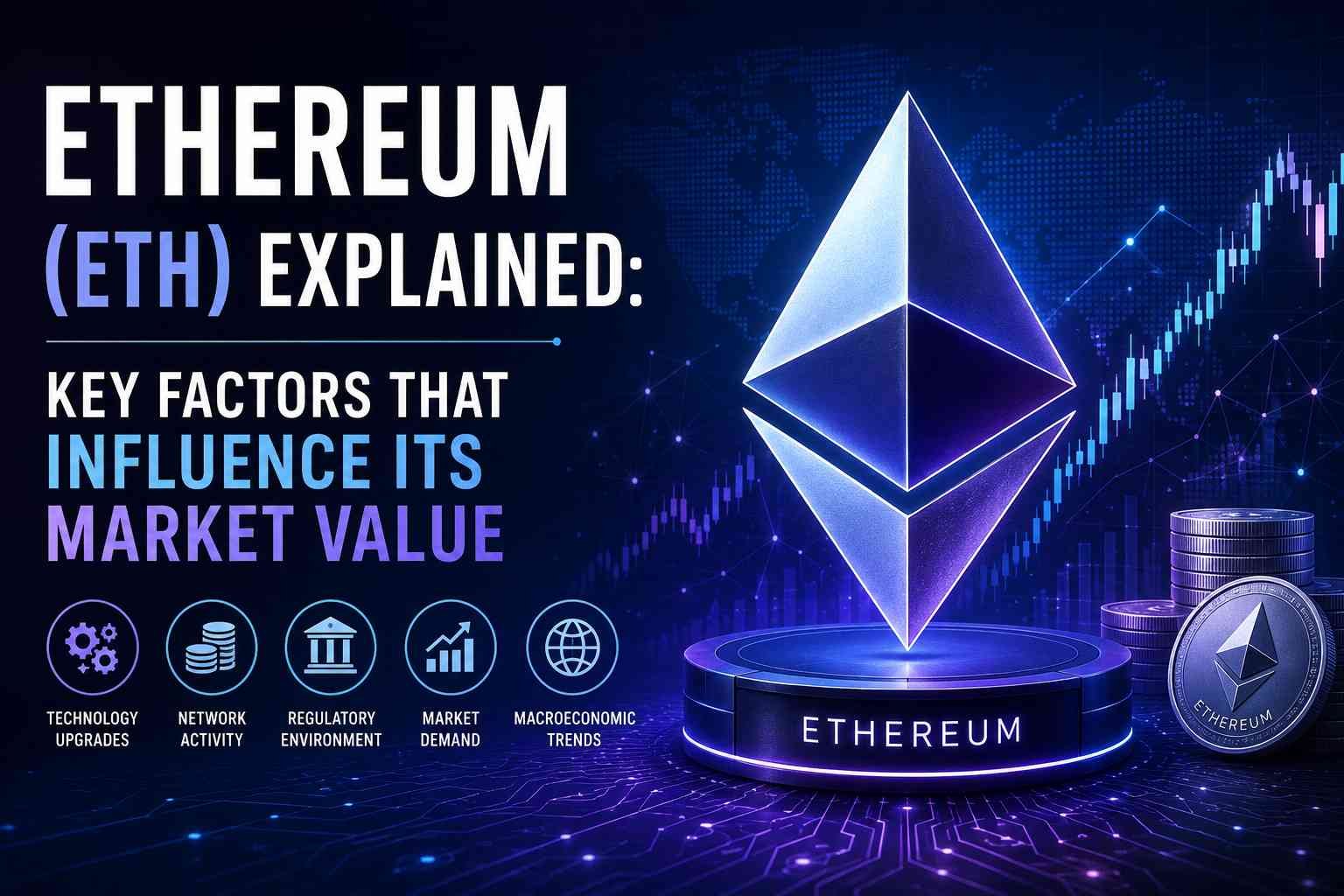
Ethereum is a leading blockchain network that supports decentralized applications, smart contracts, and a significant share of the digital asset ecosystem. Ether (ETH), its native cryptocurrency, enables transactions and computational processes. Understanding the factors that drive Ethereum’s market value is essential for those tracking ether in USD or assessing broader cryptocurrency trends.
This article provides an overview of Ethereum, analyzes the factors influencing its valuation, and describes common user interactions with ETH, with a focus on compliance and responsible use.
What Is Ethereum and Why Does It Matter?
Ethereum is a platform that allows anyone to run software and applications without centralized control. Unlike Bitcoin, which primarily serves as digital gold or currency, Ethereum supports a wide range of uses, including online finance, digital collectibles (NFTs), and blockchain-based games. Ether (ETH) is used to pay for transactions and application usage on Ethereum, known as ‘gas fees’. As demand for Ethereum applications increases, the need for ETH rises, which can drive its price.
Understanding Ether in USD
Ether’s price is typically quoted in fiat currencies such as the US dollar. Tracking ether in USD allows investors and users to assess their value and market performance. However, cryptocurrency prices are highly volatile and influenced by numerous internal and external factors. When checking the current ether price, users should use reputable platforms and recognize that prices may differ slightly between exchanges due to liquidity and regional demand.
Key Factors That Influence Ether’s Market Value
1. Supply and Demand Dynamics
Like most assets, Ether’s price is driven by supply and demand. Ethereum’s fee-burning mechanism (EIP-1559) reduces the circulating supply of ETH over time. If demand holds steady or increases as supply decreases, the price may rise.
2. Network Usage and Adoption
Greater engagement with Ethereum-based applications increases demand for ETH. Higher activity, such as DeFi transactions or NFT trading, can result in increased transaction fees, which may affect ether’s value.

3. Technological Developments
Ethereum has implemented major upgrades, including its shift from Proof of Work to Proof of Stake. These changes aim to enhance scalability, security, and energy efficiency. Such developments often influence ETH’s price.
4. Regulatory Environment
Regulation significantly shapes the digital asset landscape. Authorities may introduce rules on how users buy and sell cryptocurrency, affecting market sentiment and liquidity. Users should comply with local laws and use regulated platforms when engaging with crypto assets.
5. Market Sentiment and Macroeconomic Factors
Global economic conditions, inflation, and investor sentiment toward risk assets all influence ETH’s price. Cryptocurrency markets also respond to news, technological advancements, and broader financial trends.
6. Competition from Other Blockchains
Ethereum competes with other blockchain platforms offering similar features. Innovations from these networks can affect Ethereum’s market share and perceived value.
How Users Typically Access Ether
Users typically access Ethereum through digital asset platforms. When searching for a crypto exchange, it is important to select licensed and regulated platforms that meet applicable compliance standards.
These platforms allow individuals to monitor crypto price movements.
- They offer secure storage solutions for digital assets.
- They facilitate buying and selling cryptocurrency in a regulated environment.
Individuals should conduct thorough research and understand the risks associated with digital assets before making any transactions.
Risks and Considerations
While Ethereum offers significant innovation, it is important to approach digital assets with caution. Key risks include:
- Price Volatility: The price of ether today may differ significantly from past or future values.
- Regulatory Changes: Evolving regulations may affect access and usage.
- Technological Risks: Smart contract vulnerabilities or network issues can impact operations.
- Market Risks: External factors can influence liquidity and valuation.
The Future of Ether Value
Ethereum is evolving through ongoing upgrades aimed at improving scalability and efficiency. As the ecosystem expands, its role in decentralized applications and financial services may grow. However, ether’s future value will depend on technological progress, adoption, regulatory clarity, and overall market conditions.
Conclusion
In summary, Ethereum supports much of today’s blockchain activity, with Ether at its core. By tracking ether in USD and understanding key factors, individuals can make informed decisions. It is essential to stay informed, use regulated platforms, and approach digital assets responsibly.
Disclaimer: This article is intended for informational purposes only and does not constitute financial advice or a recommendation to trade. Users should carefully assess their financial situation and risk tolerance before participating in the digital asset market.